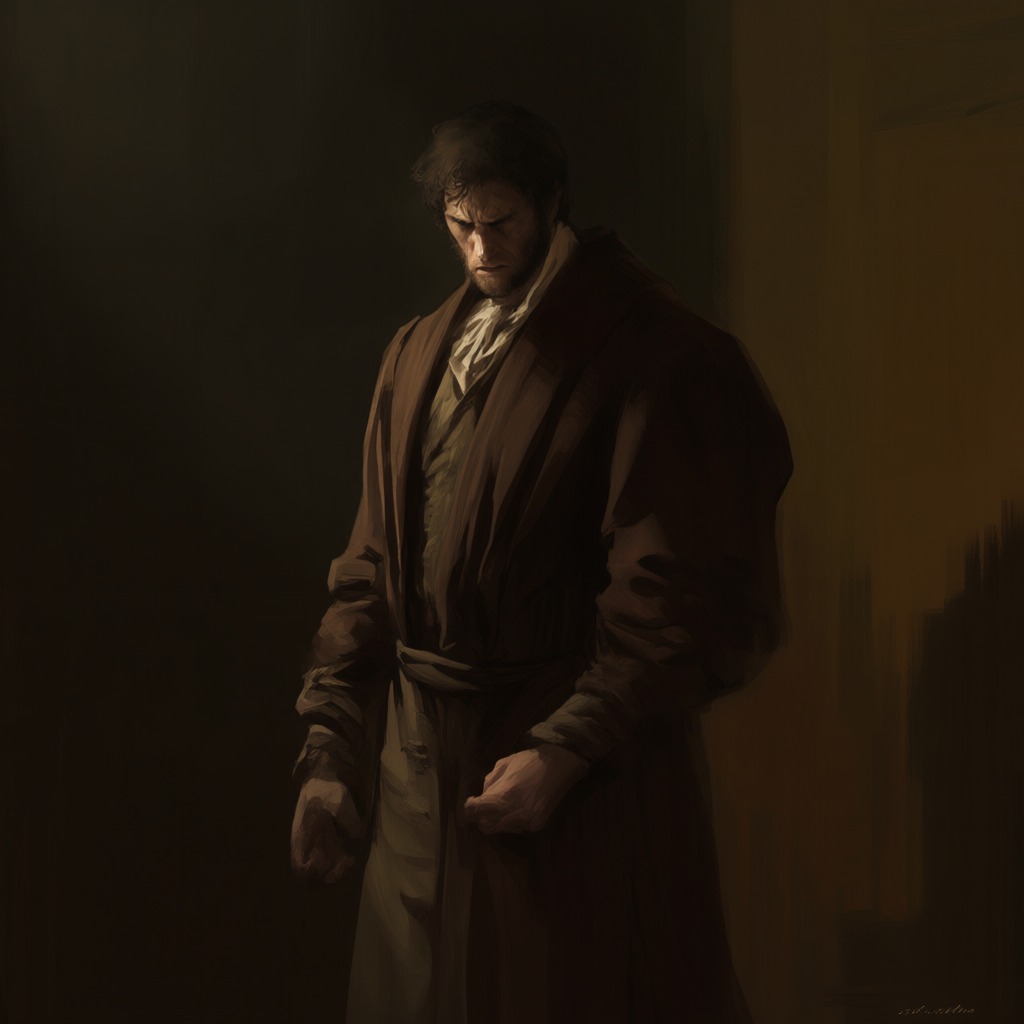
Ben Rogers
Ben Rogers is a boy of St. Petersburg, a contemporary and sometime playmate of Tom Sawyer. He is first encountered as the very boy whose ridicule Tom most dreads while whitewashing the fence, yet he becomes the first dupe of Tom's inspired stratagem. Ben's initial appearance establishes him as a lively, imaginative child: he comes hopping and skipping down the street, personating a steamboat, the Big Missouri, complete with elaborate sound effects and nautical commands. He is eating an apple and taunts Tom about having to work, but Tom's feigned absorption in the whitewashing—and his claim that it "suits Tom Sawyer"—quickly reverses their positions. Ben, fascinated, begs to try his hand, and ultimately trades his entire apple for the privilege of whitewashing. This transaction sets the pattern for the afternoon, as Ben, exhausted, is replaced by other boys, each paying Tom for the chance to work. Ben thus serves as the initial proof of Tom's "great law of human action": that making a thing difficult to attain makes it coveted.
Role in the Community and School
Ben appears elsewhere as a typical member of the village's boy society. He is one of the boys Tom approaches at Sunday-school to trade for tickets, exchanging a piece of licorice and a fish-hook for a yellow ticket. He is also the source of information about the wages of a circus clown—"most a dollar a day," according to Ben—a detail that feeds Tom's fantasies of a glamorous life. In the schoolroom, Ben is called upon by the schoolmaster, Mr. Dobbins, during the inquest over the torn anatomy book; he denies tearing it, and the questioning passes on. His presence in these scenes marks him as an ordinary, unremarkable member of the peer group, neither a leader nor an outcast.
Moral and Social Dimensions
Ben's character is further illuminated by his absence from the more serious moral crises of the novel. He is not among the boys who witness the graveyard murder, nor does he share in the burden of the secret oath. When Tom and Huck later discuss the fate of Muff Potter, Ben is mentioned only as a link in a chain of gossip—he told a "nigger," who told Huck, about Bob Tanner's wart-cure. This places Ben within the oral culture of the town, a conduit of information rather than a keeper of dangerous knowledge. His moral universe is conventional: he is one of the boys who, during the revival, "got religion," and Tom finds him "visiting the poor with a basket of tracts," a sight that deepens Tom's depression. Ben's piety is a passing phase, part of the town's collective emotional weather, not a deep personal transformation.
Significance in the Narrative
Ben Rogers functions primarily as a representative of the ordinary boyhood against which Tom's exceptional adventures are measured. He is the first to fall for Tom's whitewashing trick, the source of mundane intelligence about circus wages, and a participant in the school's routine punishments and examinations. He never becomes a close friend or co-conspirator like Joe Harper or Huckleberry Finn; his role is to populate the village with credible, recognizable figures who react to Tom's schemes with predictable envy, admiration, or disapproval. Through Ben, Twain illustrates the social dynamics of a small-town boyhood—the hierarchies, the trades, the shared superstitions, and the easy shifts between play and earnestness—without giving him a story of his own.